First Puppy Training: Name, Potty, and Handling
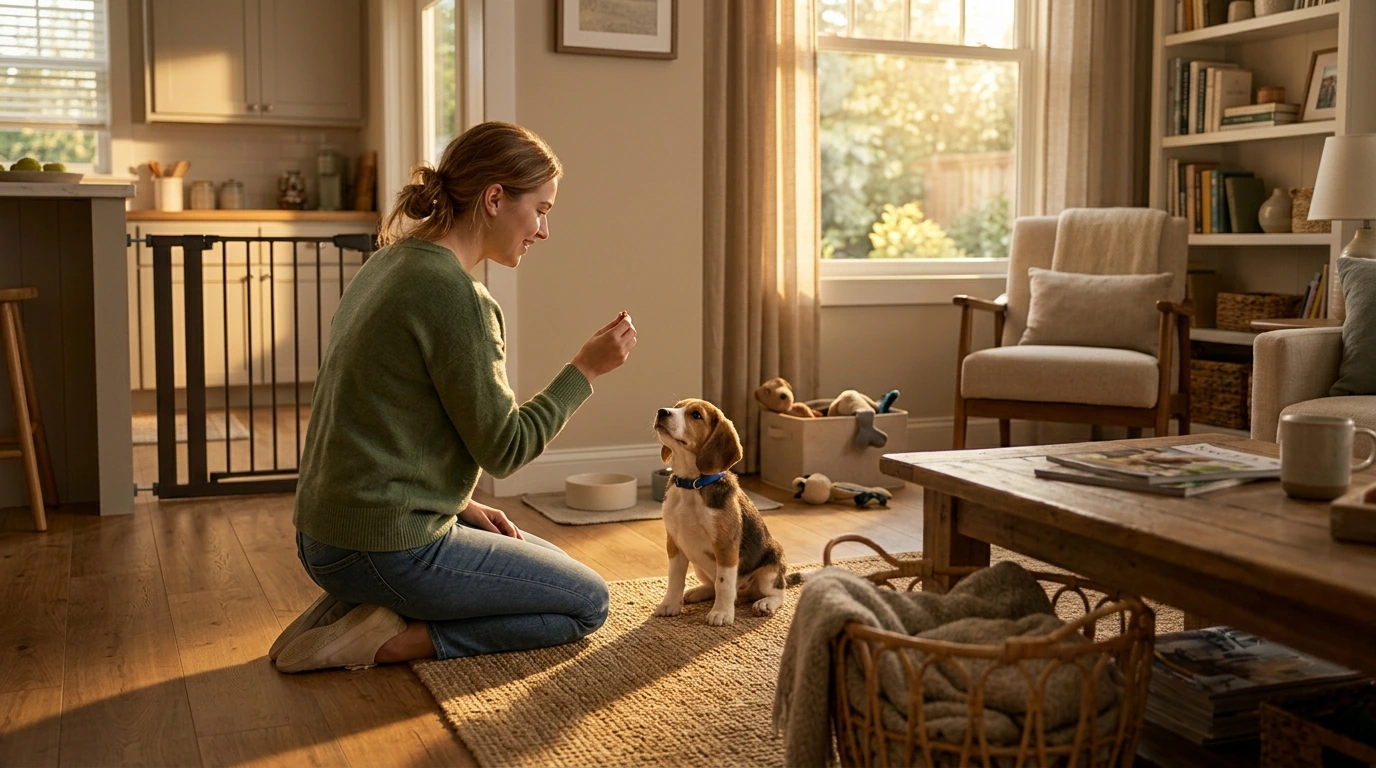
What should you train your new puppy first?
Start with three priorities: name recognition, potty training, and gentle handling. These set the foundation for every other lesson because they build attention, create a predictable routine, and make your puppy comfortable being touched and guided.
1) Name recognition (attention on cue)
Your puppy’s name is the gateway to all training. Say the name once in a cheerful tone, and when your puppy looks at you, reward immediately with a tiny treat or praise. Practice for 30–60 seconds a few times a day. If the puppy doesn’t respond, move closer and try again—avoid repeating the name over and over, which teaches them to tune it out.
2) Potty training (routine before “commands”)
Potty training is less about teaching a word and more about preventing mistakes. Take your puppy out after waking, after eating/drinking, after play, and at least every 1–2 hours at first. Use one consistent potty cue, reward right after they finish, and supervise indoors so accidents don’t become habits. If an accident happens, clean it thoroughly with an enzymatic cleaner and tighten the schedule.
3) Handling and calm cooperation
Teach your puppy that paws, ears, mouth, collar grabs, and gentle brushing are safe. Pair brief touches with treats, then stop before the puppy squirms. This early comfort pays off for vet visits, grooming, nail trims, and everyday safety.
What to add next (quick wins)
Once those three are underway, introduce “sit” and “come” using rewards, plus short crate or alone-time practice to prevent separation stress. Keep sessions short, end on success, and prioritize consistency over intensity.
For a deeper step-by-step plan and common mistakes to avoid, visit the full guide here.
For First Puppy Training: Name, Potty, and Handling, the best answer depends on fit, material, care instructions, and how the product will be used day to day.
FAQ
How do you socialize a puppy safely?
Use controlled, positive exposure: calm people, friendly vaccinated dogs, different surfaces, and everyday sounds. Keep sessions short, pair new experiences with treats, and avoid overwhelming places until your vet confirms it’s safe for your puppy’s vaccination stage.










Leave a comment